5 min read


Data security is not a checkbox. It is a system of decisions, controls, reviews, and accountability. That is why ISO 27001 matters when you are choosing a cloud-based collaboration platform. It gives you a structured way to evaluate whether a provider manages information security in a disciplined, auditable way.
That said, ISO 27001 is often misunderstood in cloud software buying. It is useful, but it is not magic. A certificate does not tell you everything about how a provider encrypts data, handles access, limits insider risk, or supports secure collaboration with external parties. To make a sound decision, you need to know what ISO 27001 actually covers, what it does not guarantee, and what else to assess.
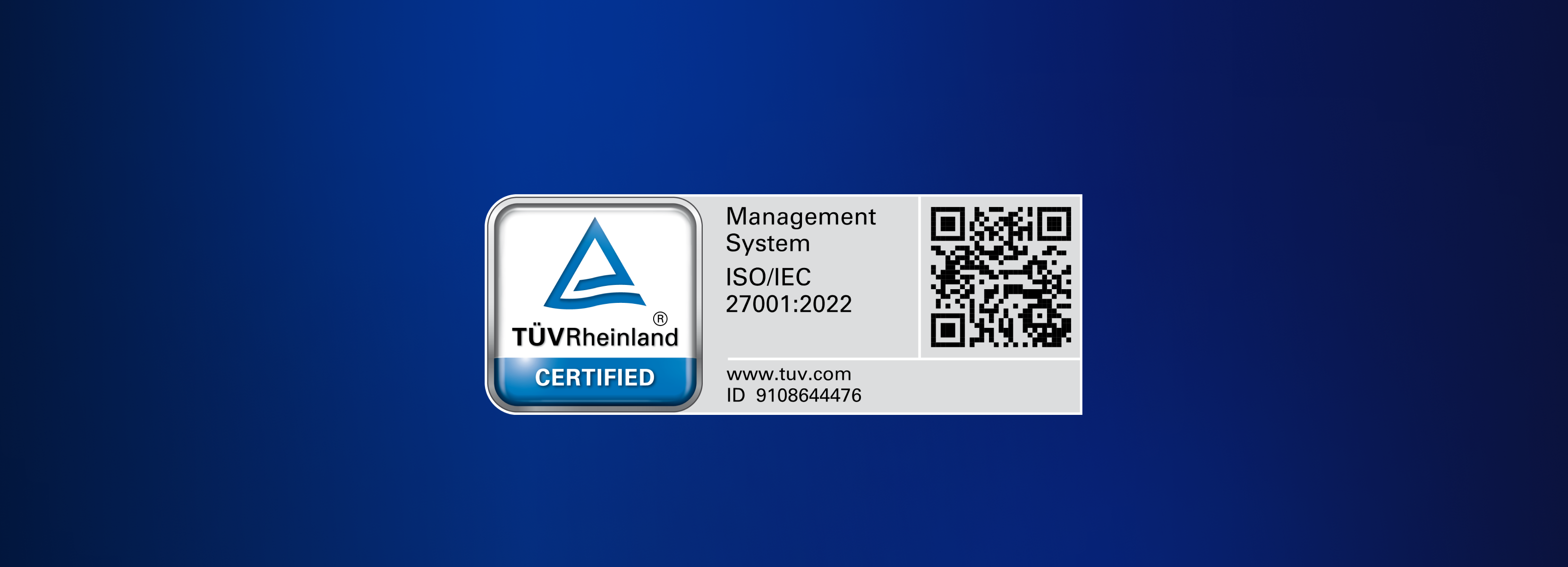
Tresorit recently passed its ISO 27001:2022 surveillance audit, continuing the certification journey it first announced earlier. That milestone matters, but the more important question for buyers is this: what should ISO 27001 tell you about a cloud collaboration provider in practice?
What ISO 27001 is
ISO/IEC 27001 is an international standard for establishing, operating, monitoring, and continually improving an information security management system (ISMS). In plain terms, it requires an organization to identify information security risks, decide how to treat them, document responsibilities and controls, and review whether those controls actually work.
This matters because security failures in cloud collaboration rarely come from one dramatic mistake. More often, they come from everyday breakdowns: access rights that are not reviewed, shared links that remain active too long, vendors that are not assessed properly, incident handling that is inconsistent, or sensitive files that move through tools outside approved workflows. ISO 27001 is designed to bring structure to those areas.
ISO 27001 certifies an organization’s information security management system, not that a product is breach-proof. Its value lies in how consistently a provider identifies risk, applies controls, and improves over time.
What ISO 27001 does — and does not — guarantee
ISO 27001 is valuable because it shows that security is managed systematically and independently audited. But buyers should be careful not to overread what a certificate means.
What it does indicate:
- The organization has a defined ISMS
- Risks are assessed and treated through documented processes
- Security controls are governed and reviewed
- Audits and continuous improvement are part of the operating model
- Roles, responsibilities, and incident processes are formalized
What it does not guarantee:
- That a provider will never suffer a security incident
- That every product, team, or workflow is covered by the certificate
- That the service automatically meets every industry-specific regulation
- That the platform uses the strongest possible technical design for every use case
- That the provider is the right fit for your data-sharing, privacy, or residency needs
A practical example: a cloud storage provider may be ISO 27001 certified and still offer sharing settings that are too permissive for your organization if you do not configure them properly. Certification tells you the provider has structured security governance. It does not replace product evaluation, admin configuration, or internal policy.
A valid ISO 27001 certificate is a strong due-diligence signal, but it is not a substitute for product-level security review. Buyers still need to assess access controls, encryption model, logging, sharing restrictions, and scope of certification.
How ISO 27001 applies to cloud storage and collaboration
In cloud collaboration, ISO 27001 becomes relevant wherever sensitive files move between people, devices, and organizations. That includes employee access, external sharing, permissions, vendor oversight, incident response, and the secure handling of backups and logs.
For example, if your teams share contracts, financial reports, HR files, or board materials through a cloud platform, some of the questions behind ISO 27001 become very practical:
- Who can access those files, and how is that access reviewed?
- How are external shares created, monitored, and revoked?
- Are guest users controlled centrally or left to individual employees?
- What happens if a device is lost or an account is compromised?
- How are vendors and subprocessors assessed?
- How quickly can the provider detect, investigate, and respond to a security issue?
ISO 27001 does not prescribe one exact technical architecture, but it provides the management framework around these questions. For buyers, that matters because cloud collaboration security is rarely just about storage. It is about how files are shared, approved, edited, retained, and accessed across real workflows.
This is also where buyers should look beyond the certificate itself. For highly sensitive collaboration, technical safeguards such as end-to-end encryption, zero-knowledge encryption, granular access policies, link expiry, download controls, audit logs, and admin visibility can materially improve risk reduction. ISO 27001 supports disciplined governance around such controls, but it does not automatically mean they are all present.
Common misconceptions about ISO 27001
1. “ISO 27001 means the provider is completely secure.”
No certification can honestly support that claim. ISO 27001 reduces risk through governance and control maturity. It does not eliminate risk.
2. “ISO 27001 certifies the product.”
Not exactly. It certifies the organization’s ISMS and the scope defined in the certification. Buyers should always ask what services, teams, infrastructure, and processes are actually included.
3. “If a provider has ISO 27001, I do not need to assess anything else.”
You still do. In cloud collaboration, the operational details matter: encryption design, identity integration, permission granularity, auditability, data residency options, and secure external sharing all affect real-world risk.
4. “ISO 27001 and regulatory compliance are the same thing.”
They are related, but not interchangeable. ISO 27001 can support compliance work, but it is not the same as meeting GDPR, sector-specific rules, or frameworks such as NIS2 and DORA.
5. “Annual audits mean security is ensured until the next audit.”
The opposite is true. A mature ISO 27001 program should support ongoing risk review, corrective actions, and operational improvement between audit cycles.
How organizations should assess an ISO-certified provider
If a cloud collaboration vendor says it is ISO 27001 certified, here are the questions that matter most:
1. What is the scope of the certification?
This is the first question, not a detail. Ask whether the certificate covers the specific cloud service you are buying, the relevant production environment, and the teams that operate it.
2. How does the provider secure real collaboration workflows?
Look at how the service handles:
- internal and external file sharing
- guest access
- permission inheritance
- granular link security
- device trust and session control
- audit trails for downloads, edits, and shares
3. What encryption model is used?
For sensitive collaboration, encryption architecture matters. A provider with zero-knowledge encryption reduces the risk of unauthorized access to content because the provider cannot read customer files in plaintext. That is not required by ISO 27001, but it can be a meaningful differentiator depending on your risk profile.
4. How strong are the admin and visibility controls?
An ISO-certified service should still be questioned on operational usability: can admins centrally control sharing, revoke access quickly, apply policies by group, manage integrations centrally, and investigate incidents without relying on manual workarounds?
5. How does the provider map security to your regulatory reality?
If your organization is preparing for frameworks such as NIS2, ISO 27001 certification can be a useful signal of security maturity, but it should not replace a closer review of how the provider handles incident response, supplier risk, access governance, and secure file-sharing workflows.
The most important question about ISO 27001 is not whether a provider has a certificate, but what the certificate covers. Scope determines whether the certified processes actually apply to the service and workflows you plan to use.
Why ongoing certification still matters
ISO 27001 certification runs on a multi-year cycle with surveillance audits in between. That matters because cloud environments change constantly: new features are shipped, integrations are added, vendors change, employees move roles, and attackers adapt. A provider that maintains certification is showing that security governance is not treated as a one-off project.
At Tresorit, passing the latest surveillance audit for ISO 27001:2022 shows continued alignment with updated requirements and ongoing security oversight. For customers, that is relevant not as a marketing label, but as evidence that security management is reviewed and maintained over time.
That said, the strongest buying decisions do not stop at the certificate. They combine governance signals like ISO 27001 with technical and operational questions about encryption, access control, external sharing, and administrative oversight. In secure cloud collaboration, that combination is what matters.
If you are comparing providers, use ISO 27001 as a starting point, not the finish line. And if your teams handle highly sensitive files, look closely at whether the platform’s design supports secure collaboration without pushing users toward risky workarounds or shadow IT.
For more on Tresorit’s security approach, including secure collaboration design and encryption principles, visit the security page.
If compliance requirements are also part of your evaluation, Tresorit’s compliance page provides an overview of its approach and helps you navigate the regulations and standards most relevant to your organization.
Tresorit Team
View more articles from this author
Share this article