3 min read


Have you ever caught yourself jumping from one app to the next, replying to a message here, updating a document here, and uploading a file somewhere else? That constant hopping between tasks, applications, or communication channels has a name: context switching. And while it feels like a normal part of modern work, it actually comes with hidden trade-offs – lost time, increased stress, and even unexpected security risks.
Why do interruptions cause stress at work?
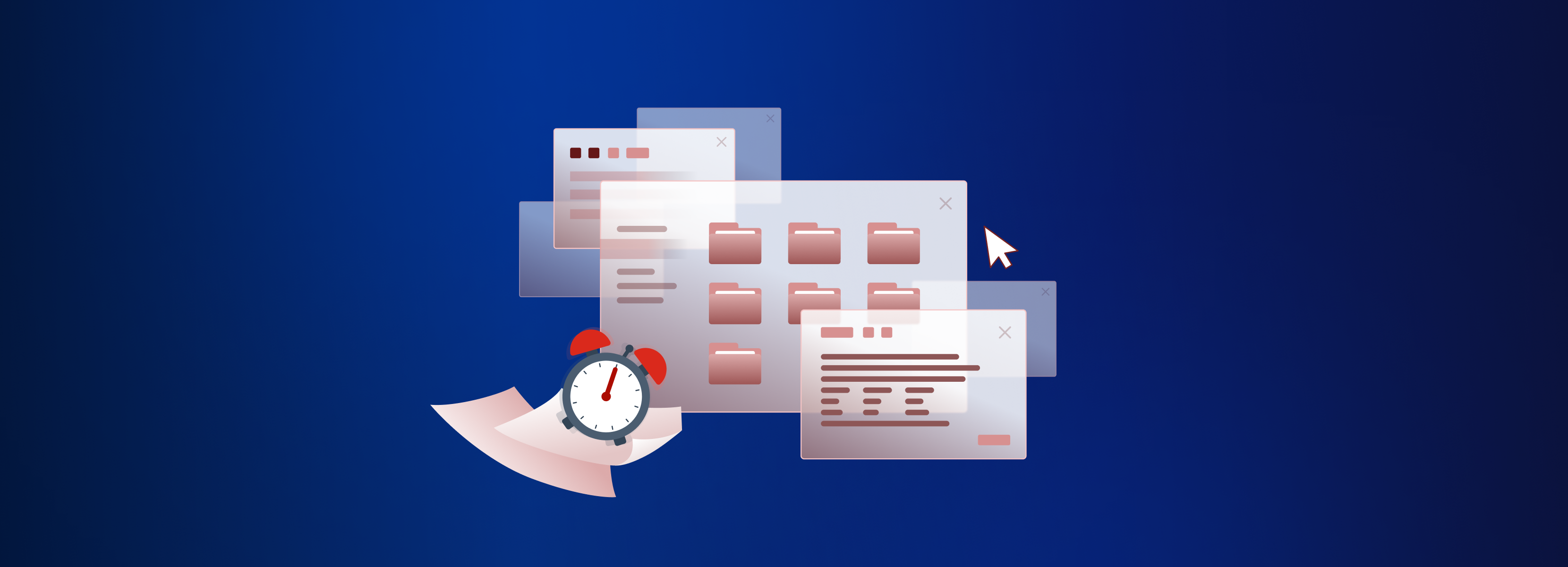
A 2022 Harvard Business Review study highlights just how significant the problem is. An analysis of 137 employees across 20 teams over a period of up to five weeks revealed that people switch between apps and websites around 1,200 times per day.
All these tiny switches – known as “toggling” - add up to almost four hours of reorientation time every week. That’s nearly half a working day lost – not to meetings, not to email overload, but simply to finding your bearings again.
Even more striking: 65% of these switches are followed by another within less than eleven seconds. That means employees barely have time to fully engage with a task. The result is interrupted attention, reduced focused work, and increased mental strain.
The researchers make one thing clear: “toggling costs” are not an inevitable side effect of digital work. They stem from inefficient tool landscapes, poorly designed workflows, and uncoordinated technology adoption. Their recommendation is equally clear – identify high-switch processes, reduce the number of tools, and invest in integrated, user-friendly solutions.
How do micro-interruptions challenge the brain?
From a cognitive psychology perspective, tool switching is a classic form of “micro-interruption” that disrupts workflow. In the field of Interruption Science, researchers describe how every tiny switch forces our brain to reset – new interface, different navigation, new visual cues.
This mental recalibration might only take seconds, but it breaks concentration and drains energy. In teams using a high number of applications, these micro-interruptions accumulate – leading to measurable productivity losses, more mistakes, and rising frustration.
A structural challenge for organizations?
Context switching has particularly negative effects on project work – especially when it involves high-trust client and partner collaboration. Focus slips, sensitive information becomes scattered across channels, coordination turns slow and fragmented, and contracting stalls without integrated digital signing. The result? Collaboration feels clunky and opaque, weakening the very trust these client relationships depend on.
Nevertheless, companies – especially in highly regulated industries – often find themselves in a dilemma. There is no single tool that meets all requirements. Even with the best intentions to simplify, organizations end up with a patchwork of apps and platforms – bringing risks to efficiency, employee well-being, and data security.
Is switching tools a security risk?
Switching tools isn’t a security risk by default. However, moving sensitive information between different platforms increases the likelihood of human error. And when people are under time pressure – often caused by inefficiencies in workflows – those mistakes become even more likely.
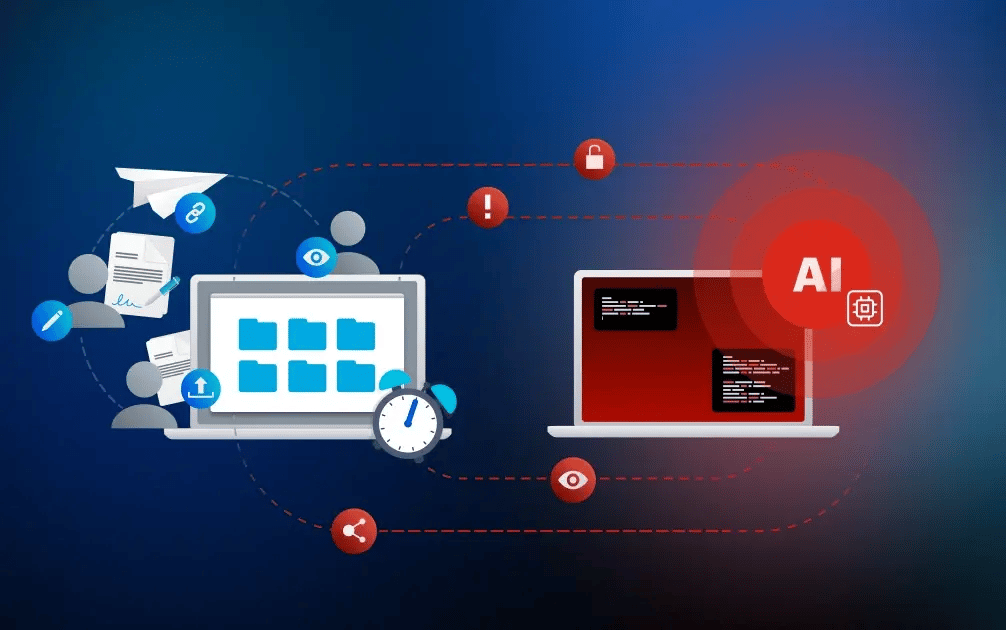
Security standards are rarely questioned. Many users assume that if sensitive files are safe on one platform, they can be transferred just as safely to another. As a results, files are dragged from cloud storage to messaging apps without a second thought – with security simply taken for granted. Yet most standard tools lack robust safeguards, such as end-to-end encryption, needed to truly protect sensitive data.
In such a fragmented tool environment, it becomes all too easy to unknowingly share information with unauthorized individuals. As transparency around roles and permissions fades, the risk of accidental oversharing rises. When teams are constantly switching tools, security becomes more a matter of luck than control.
The solution: thinking holistically
Reducing context switching and tool sprawl requires more than a few quick fixes. Companies need a holistic approach that balances requirements, processes, technology, and team habits. The following strategies help stabilize the working context and improve collaboration across the organization:
- Consolidate your tools
Fewer tools mean fewer switches, smoother workflows, and better data consistency.
- Integrate and automate workflows
Connected systems centralize workflows, reduce interruptions, and lighten the coordination burden.
- Protect workflows with secure, integrated platforms
Fewer solutions, all-in-one platforms with robust safeguards help minimize security gaps and reduce accidental sharing of sensitive business data.
- Establish clear standards
Unified rules for tool usage create transparency, prevent redundant communication, and support efficient collaboration.
Context switching drains resources
Studies show that context switching consumes valuable resources – through lost time and sustained mental strain. Because no single tool can fulfill every requirement in a modern organization, fragmented tool landscapes often emerge by necessity. But they come at a cost - reduced efficiency, increased security risks, and greater pressure on employees. The way forward? Integrated platforms that combine security, data management, and project collaboration under one roof.
Learn how Tresorit’s SecureCloud platform, combined with the project-ready data-room solution Tresorit Engage, protects internal and external workflows with separated, encrypted workspaces.
Brigitta Finta
View more articles from this author
Share this article