The main difference between Dropbox and Tresorit is the focus on collaboration and security. Dropbox is primarily designed for simple teamwork, quick sharing and integration into existing work processes. Tresorit, on the other hand, Tresorit is designed for organizations that need easy, intuitive collaboration, efficient workflows, and seamless integrations while handling confidential or sensitive information. It relies on a zero-knowledge security model with end-to-end encryption, where users retain control over their data and the provider has no access to content. While Dropbox is particularly suitable for productivity-oriented collaboration, Tresorit is aimed more at organizations with high data protection, confidentiality and compliance requirements.

Dropbox vs. Tresorit: Security architecture is the difference
While Dropbox focuses on collaboration, integrations and productivity workflows, Tresorit combines secure collaboration, ease of use and powerful productivity features with a zero-knowledge, end-to-end encrypted architecture that keeps your sensitive data private and under your control.
The sections below outline the key differences between the two cloud storage approaches in detail.
The Dropbox cloud storage model
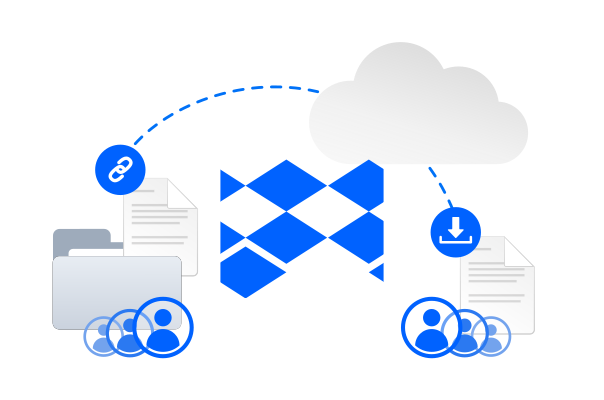
Dropbox encrypts data during transmission and at rest within the provider's infrastructure. Encryption is managed at the platform level to enable features such as previews, search, integrations and real-time collaboration. What is critical to keep in mind is that not all encryption models are the same and therefor knowing if it is client-side end-to-end encrypted vs the Dropbox model is important for the data that should be protected.
Access control
Files can be controlled via sharing, roles and permissions. This structure supports workflows, coordination and collaboration across team and organizational boundaries but also means compromises when it comes to the highest level of security for sensitive data.
Visibility for the provider
In order to provide productivity-oriented functions such as previews, search, indexing, and integrations, the technical architecture allows content to be processed within the platform or by 3rd party vendors under defined conditions. Therefore, the encryption keys are managed within the platform infrastructure.
Tresorit's security-first and zero-knowledge model
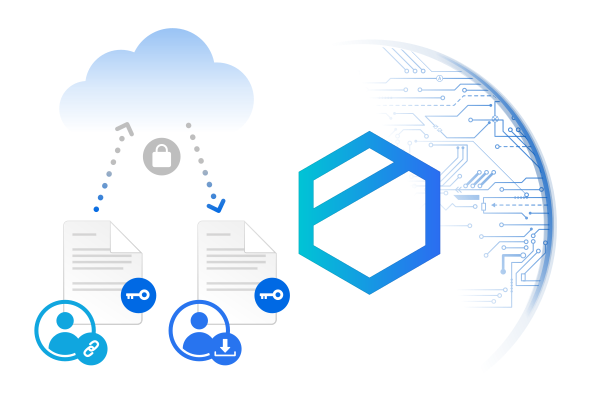
In addition to secure collaboration, ease of use and powerful productivity features Tresorit encrypts files directly on users’ devices before they are uploaded to the cloud. Encryption keys remain under the users’ control, preventing the provider from accessing unencrypted content. This model is particularly suited for organizations that require strict confidentiality, regulatory compliance, and full control over their data.
Access control
Shared files remain encrypted and can be managed through granular permission settings. Only authorized users can access the data, ensuring strong protection even during collaboration.
Provider visibility
With a zero-knowledge architecture, the provider has no technical ability to access the contents of stored files. This architecture prioritizes confidentiality and data protection, ensuring that even the service provider cannot access file contents.
Platform comparison in detail
 DropboxProductivity-oriented cloud storage
 TresoritSecurity-first cloud content solution
- Encryption modelServer-Side Encryption (SSE)Client side End-to-end encryption (E2EE) with zero-knowledge-architecture
- Encryption key ownershipProvider holds encryption ownershipUser holds encryption ownership
- Access controlIntegrated into existing workflows, access via links with different user roles and permissionsFine-grained, encrypted authorizations ensure that only authorized persons can view or edit content.
- Data residencyDropbox offers storage of file blocks in regions outside the United States. But File metadata is still stored in the USA on Dropbox’s proprietary servers. The server location selected applies at the organizational level.Users can be assigned to data centers in 12 different regions, guaranteeing that their data will reside in the designated location even if the rest of the organizational data resides in a different location.
- Security modelImplemented at the architectural platform levelImplemented at the architectural platform level
- Data sensitivitySuitable for collaboration-heavy environments, project files and medium-sensitivity content where ease of use, speed and team productivity are paramount.Designed for confidential, sensitive or regulated information where data protection and controlled access are paramount.
- Typical use casesFocus on simple collaboration, fast approvals and integration.Focus on collaboration fast and reliable aproovals while mentaining data protection, access control and privacy.

Tresorit demo
See how Tresorit works
Watch our product experts showcase the power of Tresorit SecureCloud and Tresorit Engage in short, impactful demo videos.